Project Osprey Watch

Why?
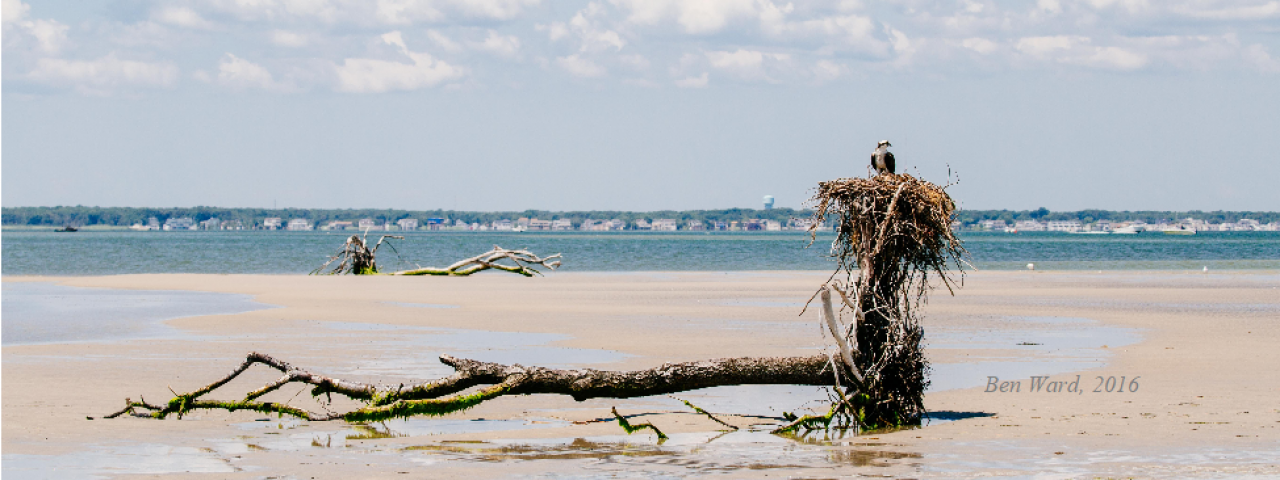
Osprey watch is a global community of citizen scientist and observers who monitor breeding pairs of Ospreys (Pandion haliaetus). The primary goal of Project Osprey Watch is to collect temporal and spatial data that is useful in addressing conservation issues, both to Osprey populations and the aquatic environments in general. Ospreys are one of the top consumers that occupy exclusively aquatic environments; as such, they are extremely sensitive to aquatic contaminants and overfishing. Furthermore, Ospreys breed in the northern latitudes, but winter in southern latitudes closer to the equator, therefore, they indicate environmental conditions over a large geographical range. For these reason, Osprey are a tremendous indicator for aquatic ecosystem stress.
Who?
Project Osprey Watch is administered jointly through the College of William & Mary and Virginia Commonwealth University’s Center for Conservation Biology. Non-profit organizations, government agencies, and citizen scientist can register online and become “nest-watchers,” with each entity monitoring a specific nest. I am working with the Virginia Master Naturalist Historic Rivers Chapter, which monitors numerous nests in James City County and York County, VA.
What?
For the project, I will be monitoring a single breeding pair and nest throughout the breeding season. This means monitoring breeding behavior, nesting, hunting, habits, hatching dates, fledging, protection, and all other aspects of the breeding and rearing process relevant to the project. Furthermore, I will communicate with other “nest-watchers” locally, and compare observations. The nest #676, is called “QL Marina” and has been continuously monitored for 7 years, since the program began.
Background.
Osprey (Pandion haliaetus), known locally as the fish hawk, are a species of large raptor birds that are found across the globe, on every continent other than Antarctica. In the United States, Osprey conservation first became an issue in the 1950s-1970s, when Osprey populations were devastated by toxic pollutants, like DDT. Some areas in New England lost 80-90% of its breed pairs; the Chesapeake Bay watershed lost over half its breeding pairs during that time frame. (Bierregaard 2016) Osprey are one of the few species of raptors that utilize almost exclusively aquatic environments. Fish make up over 90 percent of an Osprey’s diet, therefore most nests are built in close proximity to large water bodies. (All About Birds) Being an apex predator in aquatic environments, Osprey are highly susceptible to all types of environmental pollution and degradation. When runoff from lawn and agricultural fertilizers leads to eutrophication in major water bodies, the resulting fish kills can drastically deplete the Ospreys major food source. Furthermore, pollutants such as organo-chloride pesticides (OCPs), poly-brominated diphenyl ethers (PBDEs), polychlorinated biphenyl (PCBs), and other flame retardants are increasingly found in toxic concentrations in aquatic ecosystems. The concentration of these toxins, and the effect they have on the ecosystem is increased dramatically as they move through the food chain; a process known as biomagnification, leading to distinct and pronounced effects in Ospreys, including egg thinning and increased offspring mortality. (Rattner 2003)
Although fish stocks in the Chesapeake Bay are currently stable, historically Osprey have suffered from overharvest of stocks. During the 1980s and 1990s, overfishing decimated Bay stocks of Atlantic Menhaden, the primary food source of Osprey. (VIMS 2011) Furthermore, this drop in abundance of Menhaden has been linked to increased rates of disease in Striped Bass, Ospreys secondary food source. (CBF 2019)
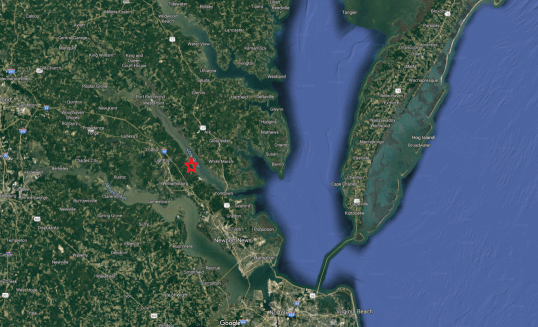
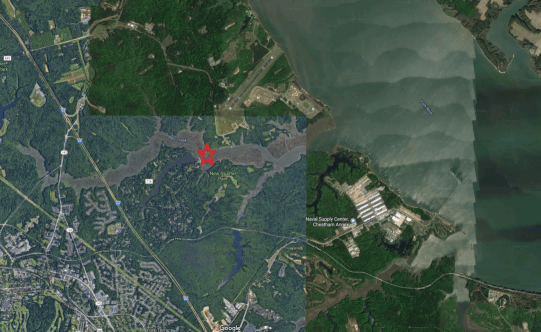
The nest I am monitoring is on Queens Creek, a tributary of the York River

All About Birds, Cornell Lab of Ornithology. Osprey Life History. https://www.allaboutbirds.org/guide/Osprey/lifehistory
Bierregaard, R. O., et al (2016). Osprey (Pandion haliaetus), version 2.0. In The Birds of North America (P. G. Rodewald, Editor). Cornell Lab of Ornithology, Ithaca, NY, USA. https://doi.org/10.2173/bna.683
Chesapeake Bay Foundation. (2019, February). Atlantic Menhaden: The Chesapeake’s Unsung Hero. https://www.cbf.org/about-the-bay/more-than-just-the-bay/chesapeake-wildlife/menhaden/
Rattner, B. A., et al (2003). Examination of contaminant exposure and reproduction of ospreys (Pandion haliaetus) nesting in Delaware Bay and River in 2015. Environmental Contimination and Toxicology, 47, 126-140. https://doi:10.1016/j.scitotenv.2018.05.068
Virginia Institute of Marine Science. (2011, March). About Ospreys. Retrieved from https://www.vims.edu/bayinfo/ospreycam/about_ospreys/
 Project Osprey Watch